

🧠 Quick Answer: Red or Green for Hunting?
- Fox hunting → 🔴 Red light (stealth, minimal alert)
- Feral pigs → 🟢 Green light (better visibility + still low disturbance)
- General night hunting → 🟢 Green (balanced performance)
👉 This is why professional hunters rarely use white light.
🧠 Why Do Hunters Use Red or Green Light?
If you've ever hunted at night, you've probably heard this:
👉 "Use red light — animals won't see you."

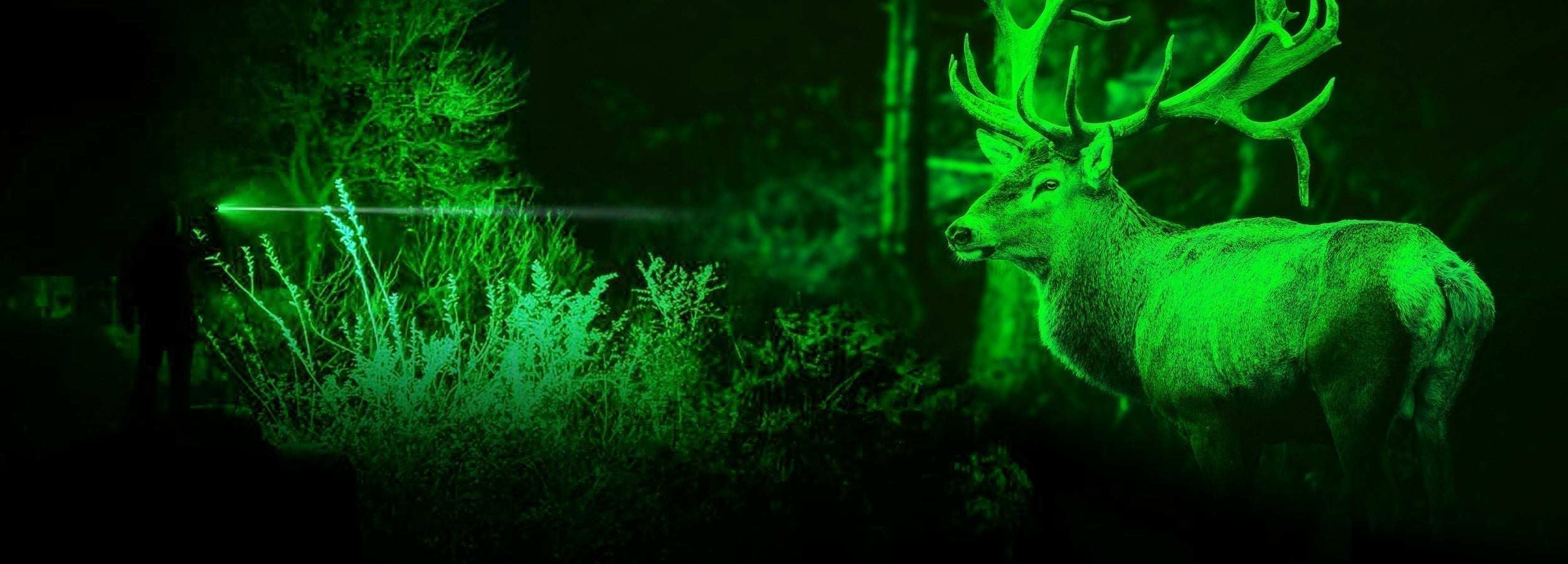
(The image was generated by AI)
But is that actually true?
And more importantly:
👉 Why do animals react differently to red and green light?
Let's break down the science behind it.
👁️ How Animal Vision Is Different from Humans
Humans see the world in full color using three types of cones:
- Red
- Green
- Blue

👉 Simplified diagram of animal visual spectrum
Humans vs Animals — Weak perception in red areas
👉 But most nocturnal animals don't.
Animals like foxes and feral pigs rely more on:
- Rod cells (low-light vision)
- Limited color detection
👉 This means:
They are extremely good at detecting movement,
👉 but very poor at distinguishing certain colors.
🔴 Why Red Light Is Almost Invisible to Animals
Red light has a longer wavelength.
For animals like foxes and pigs:
- Their eyes are less sensitive to red wavelengths
- Red light appears very dim or even invisible
👉 In simple terms:
Red light lets you see the animal,
👉 without the animal clearly seeing you.
👉 Recommended Setup for Fox Hunting:
A red-light flashlight with focused beam (high candela) allows you to identify targets without spooking them.
🟢 What About Green Light?
Green light is different.
Animals can detect green better than red — but:
- It still appears less intense than white light
- It provides better contrast for the hunter

👉 Best for Feral Pigs:
Green light provides better terrain visibility while still remaining less intrusive than white light.
[Explore Green Beam Flashlights →]
👉 That's why:
- Red = stealth
- Green = visibility
🐗 Foxes vs Feral Pigs — Do They See the Same?
Not exactly.
🦊 Foxes
- More sensitive to movement
- Slightly better at detecting light changes
👉 Best choice: Red light for stealth
🐗 Feral Pigs
- Poor long-distance vision
- Strong reliance on smell and hearing
👉 Best choice:
- Red for close stealth
- Green for clearer targeting
🌫️ Real-World Hunting Insight
In real hunting conditions:
- Dust
- Fog
- Bush terrain
👉 Light behavior matters even more than brightness.
👉 Red Light:
✔ Minimal disturbance
✔ Best for scanning
✔ Ideal for cautious animals
👉 Green Light:
✔ Better clarity
✔ Better target identification
✔ Easier aiming

Real-world example:
Many Australian hunters report that feral pigs show little to no reaction under green light at distances beyond 50–100 meters, while white light often causes immediate movement or escape behavior.
⚠️ Common Mistake Hunters Make
Many beginners think:
👉 "Brighter is better"
But in reality:
Too much white light will instantly alert animals.
👉 Result:
- Animals run
- Opportunity lost
🏹 FieldLume Hunting Philosophy
At FieldLume, we don't just build bright flashlights.
👉 We build lights designed for real hunting behavior.
✔ Optimized red & green wavelengths
✔ Controlled beam intensity
✔ Long-distance usable throw
👉 So you can:
- Stay hidden
- See clearly
- Take the shot with confidence
📊 Quick Summary
- Animals don't see light like humans
- Red light = stealth
- Green light = visibility
- White light = alert & escape
🎯 Final Thought
Hunting isn't just about power.
👉 It's about understanding your target.
🔦 Hunt Smarter — Choose the Right Light
Ready to hunt smarter at night?
Explore FieldLume Hunting Series:
✔ Red Light (Stealth Mode)
✔ Green Light (Visibility Mode)
✔ Long-Throw Optics for Target Detection

Share:
12- 🔥 Why Does Your Flashlight Get Hot?