

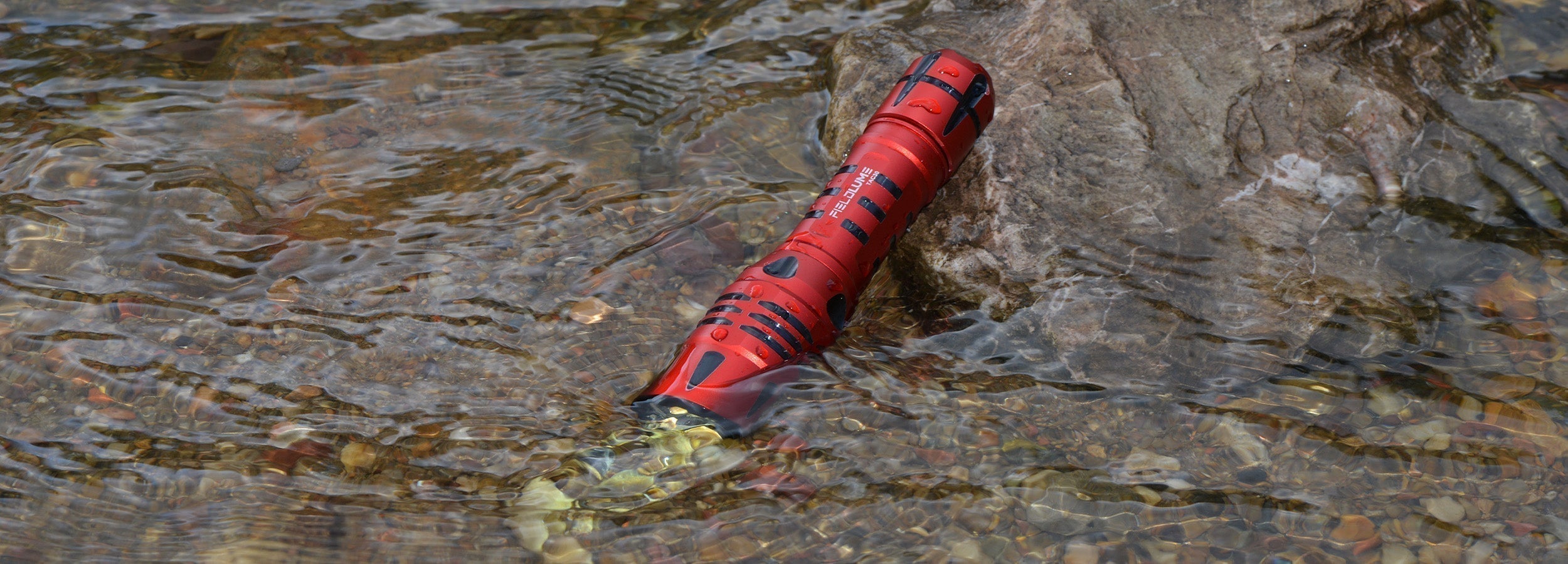
IP68 is not a guarantee of real-world reliability.
👉 It's only a controlled lab rating.
You've probably seen labels like:
👉 IP65, IP67, IP68
on flashlights and outdoor gear.
But what do they actually mean?
And more importantly:
👉 Can you trust them in real-world conditions?
🔍 What Is an IP Rating?
IP stands for Ingress Protection.
It's an international standard that measures how well a device is protected against:
- Solid particles (like dust)
- Liquids (like water)

Buy it now! A flashlight built for real conditions
The rating has two numbers:
IP6X
- First digit = dust protection
- Second digit = water protection
🟤 Dust Protection (First Digit)
| Rating | Meaning |
|---|---|
| 5 | Limited dust resistance |
| 6 | Completely dustproof |
👉 IP6X = No dust can enter the flashlight.
💧 Water Protection (Second Digit)
| Rating | Meaning |
|---|---|
| 4 | Splash resistant |
| 6 | Strong water jets |
| 7 | Temporary immersion |
| 8 | Continuous immersion |
👉 So what does IP68 mean?
✔ Completely dustproof
✔ Can be submerged in water

Real conditions are unpredictable.
👉 Your gear should be ready for that.
Many brands advertise IP68.
👉 But never explain the test conditions behind it.
⚠️ The Truth About IP68 (Most Brands Don't Tell You)
Here's the important part:
👉 IP68 does NOT mean “indestructible underwater.”
The rating depends on:
- Depth (usually 1–2 meters)
- Duration (typically 30 minutes)
- Controlled lab conditions
👉 In real life:
- Saltwater
- Pressure changes
- Temperature differences
can all affect performance.
In real-world conditions, things change:
- Moving water
- Mud and debris
- Temperature differences
👉 These can all break the seal — even on IP68 devices.
🧪 Why Some “Waterproof” Flashlights Fail
Many cheap flashlights claim IP68.
But in reality:
- Poor sealing design
- Low-quality O-rings
- Loose threading
👉 Result: Water gets in.
🏾 What Makes a Truly Waterproof Flashlight?
A real IP68-grade flashlight requires:
✔ Precision CNC machining
✔ Tight thread tolerances
✔ High-quality sealing rings
✔ Proper structural design
👉 Waterproofing is not just a label.
It's engineering.
🔧 FieldLume's Approach
At FieldLume, waterproofing is built into the structure:
✔ Deep-cut precision threads
✔ Reinforced sealing system
✔ Tested for real outdoor conditions
👉 So your flashlight performs not just in theory —
but in the field.
🌧️ Real-World Use Cases
An IP68 flashlight is ideal for:
- Heavy rain
- River crossings
- Camping in wet environments
- Emergency situations
👉 It's not about “can it survive water”
👉 It's about whether you can rely on it

Looks similar outside.
👉 Completely different inside.
📊 Quick Summary
- IP68 = dustproof + waterproof
- Not all IP68 ratings are equal
- Build quality matters more than labels
🚀 Final Thought
IP rating tells you the limit.
👉 Build quality tells you the truth.
A flashlight that fails in water
is not just inconvenient.
👉 It's unreliable.
🔦 Choose a Flashlight Engineered for Real Environments
Don't rely on a rating alone.
👉 Choose a flashlight engineered for real environments:
https://fieldlume.com.au/products/fieldlume-tac30-red-tactical-torch-3000lm
Share:
10- Why Do High-Lumen Flashlights Step Down Automatically? (And Why It’s Not a Bad Thing)
12- 🔥 Why Does Your Flashlight Get Hot?