


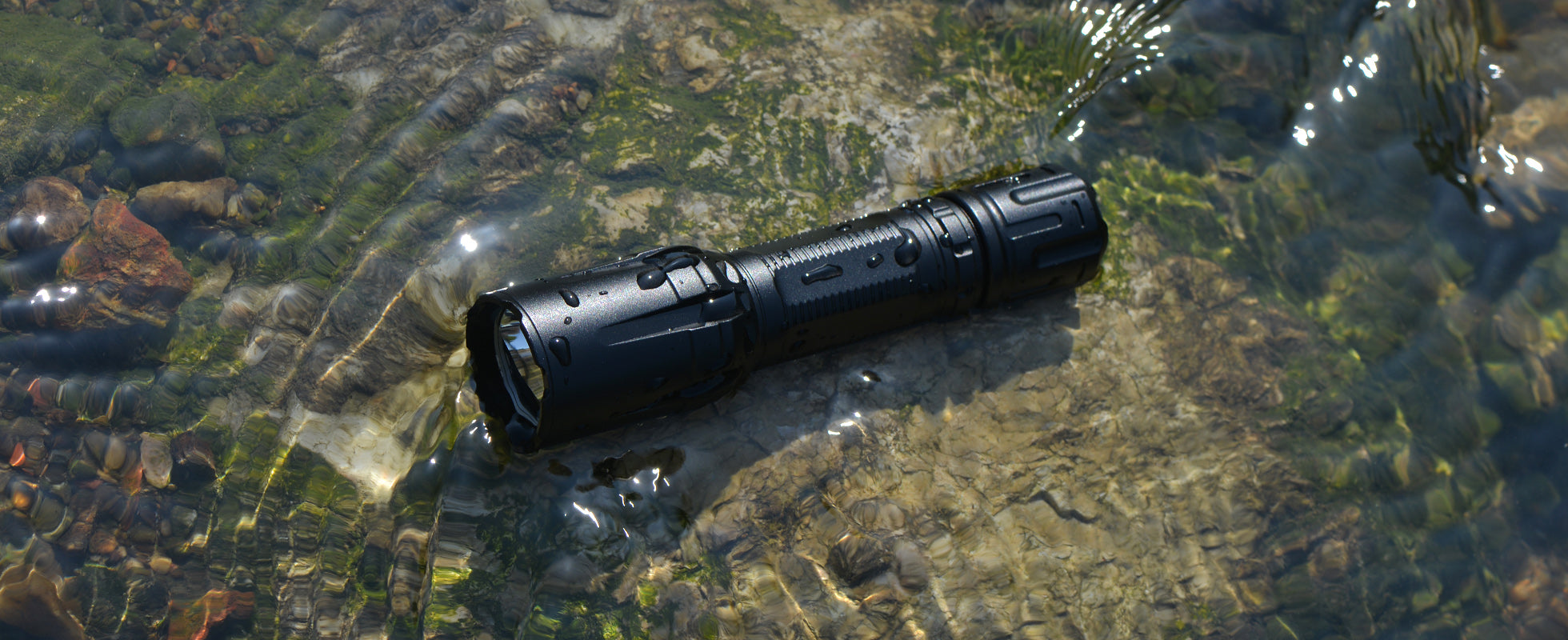
How to Choose a Flashlight for Emergencies
A phone light can be useful when you need quick illumination, but a dedicated flashlight gives you a separate power source, purpose-built controls and lighting modes designed specifically for use in the dark.
For power outages, roadside problems, travel or general emergency preparedness, the best flashlight is not simply the one with the highest lumen number.
It is the one you can find, operate and rely on when you need it.
Compact Light for Emergency Preparedness
The FIELDLUME T1 Titanium EDC Flashlight combines a 300-lumen main beam, USB-C charging, multiple lighting functions and up to 30 hours of runtime in a compact everyday-carry design.

1. Look for Useful Runtime
Maximum brightness is helpful, but emergency lighting often involves longer periods of use.
A flashlight with several output levels lets you use high output when needed and lower modes when preserving battery life matters more.
When comparing products, look beyond the maximum lumen figure and check the available modes and stated runtime.
2. Choose Simple Controls
Emergency equipment should be easy to operate.
Consider:
- how the flashlight turns on;
- how quickly you can reach the mode you need;
- whether the controls are easy to understand in the dark.
More modes are not automatically better. What matters is whether the interface makes sense for the product's intended use.

3. Think About Charging and Battery Access
Rechargeable flashlights are convenient when they can be kept topped up between uses.
USB-C can make charging easier when you already carry compatible charging equipment.
For an emergency kit, the more important habit is simple:
keep the flashlight charged and check it periodically.
A flashlight left with a depleted battery is not useful regardless of its specifications.

4. Match Brightness and Beam to the Situation
Different emergencies require different lighting.
A broad lower-output beam can work well indoors or around a vehicle.
Higher output and more beam distance can help outdoors when you need to see farther ahead.
This is why lumens alone should not determine your choice.
Related Guide: Lumens vs Candela →
5. Check Water Resistance and Carry
If the flashlight may be used outdoors, check its stated IP rating rather than relying on words such as “waterproof.”
Size also matters.
A large flashlight can work well in a home or vehicle kit, while a compact EDC light is easier to keep with you every day.
The best emergency flashlight is often the one that is actually available when something goes wrong.
A Real-World Example: FIELDLUME T1
The FIELDLUME T1 is a compact titanium EDC flashlight with:
- up to 300 lumens;
- up to 158m beam distance;
- USB-C charging;
- IP65 dust and water resistance;
- multiple white and side-light functions;
- up to 30 hours of runtime.
Its compact size makes it suitable for a pocket, bag or everyday emergency kit rather than only being stored at home.
Key Takeaway
When choosing an emergency flashlight, focus on:
Runtime + Simple Controls + Charging + Useful Beam + Water Resistance + Carry
The highest lumen number is not always the most important specification.
A flashlight that is charged, easy to use and suited to your situation is more useful than one selected by brightness alone.
Keep Useful Light Within Reach
The FIELDLUME T1 Titanium EDC Flashlight combines compact everyday carry with rechargeable power and multiple lighting functions for travel, outages and general preparedness.

FAQ
How many lumens do I need for an emergency flashlight?
There is no single correct number. Lower outputs can be useful for indoor and extended use, while higher output can help when you need more area coverage or distance.
Is a phone flashlight enough?
A phone light can be useful for quick tasks. A dedicated flashlight gives you a separate battery and purpose-built lighting controls, which can be useful in longer or more demanding situations.
How often should I check an emergency flashlight?
Check it periodically to make sure the battery is charged, the controls work and any stored accessories are still in good condition.
Share:
Flashlight Lumens Explained: Does More Mean Better?