


What Is Type III Hard Anodizing? Why Flashlights Use It
Type III hard anodizing is a surface treatment commonly used on aluminum parts that need better resistance to wear and abrasion.
It is often found on flashlights, tools and other equipment designed for frequent handling. But what does Type III actually mean, and is it really “military-grade”?
Type III Finish. Built for Regular Use.
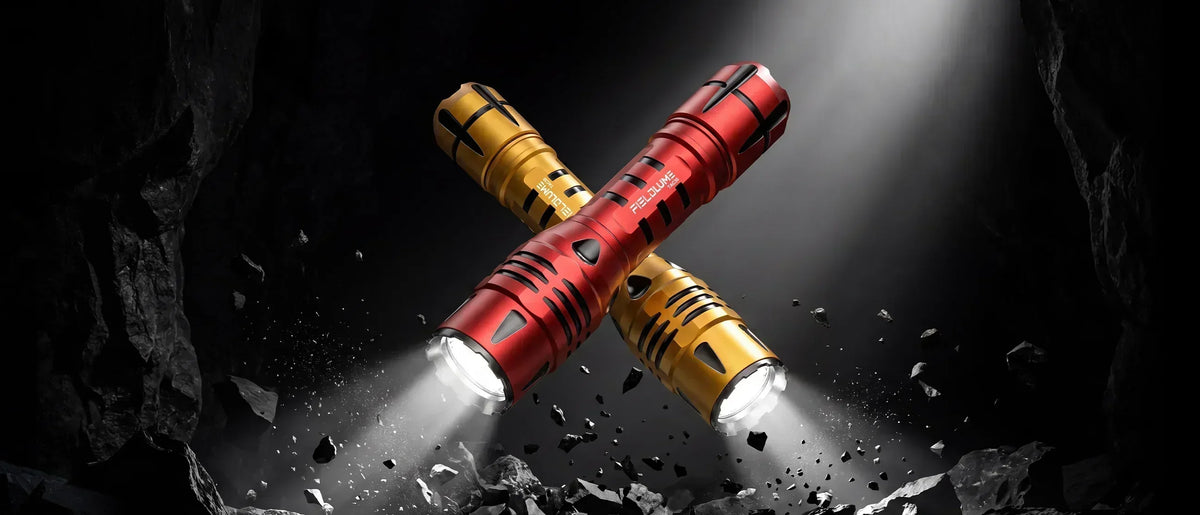
The Fieldlume TAC30 Tactical Flashlight uses a Type III hard-anodized aluminum body, making it a practical example of this finish on a high-output flashlight.

What Is Hard Anodizing?
Anodizing is an electrochemical process that changes the surface of aluminum into an oxide layer.
Unlike paint, which sits on top of the material, the anodized layer develops from the aluminum surface itself.
Type III, also called hard anodizing or hardcoat anodizing, is designed for applications where increased wear and abrasion resistance is important.
Type II vs Type III
| Type II | Type III | |
|---|---|---|
| Main purpose | General or decorative anodizing | Wear-resistant hard anodizing |
| Coating | Generally thinner | Generally thicker |
| Common use | Everyday aluminum products | Higher-wear components |
The final result still depends on the aluminum alloy and manufacturing process.
Is Hard Anodizing the Same as Paint?
No.
Paint adds a separate coating over the surface.
Anodizing changes the aluminum surface itself, which is why it behaves differently under repeated handling and wear.
But hard anodizing is not indestructible.
Can Type III Hard Anodizing Scratch?
Yes.
Type III hard anodizing improves wear resistance. It does not make aluminum scratch-proof.
Strong abrasion, impact or contact with harder materials can still leave marks. High-contact edges may also show normal wear over time.
What Does “Military-Grade” Mean?
You may see Type III described as military-grade hard anodizing.
There is a technical basis for the term: MIL-PRF-8625 includes Type III hard anodic coatings for aluminum and aluminum alloys.
However, the words “military-grade” alone do not prove that a specific product has been tested or certified to a particular military standard.
For buyers, the more useful information is the actual finish specification:
Type III Hard Anodizing.
Why Use Type III on a Flashlight?
Flashlights are regularly carried in pockets, bags and holsters, placed on rough surfaces and handled outdoors.
A harder anodized surface therefore makes sense for an aluminum flashlight expected to see frequent use.
The Fieldlume TAC30 uses a Type III hard-anodized aluminum body as part of its tactical flashlight construction.
Key Takeaway
Type III hard anodizing:
- is an electrochemical treatment for aluminum;
- is different from ordinary paint;
- improves resistance to wear and abrasion;
- can still scratch or show wear over time.
The technical specification matters more than broad marketing terms such as “military-grade.”
See Type III Hard Anodizing in Real Use
The Fieldlume TAC30 Tactical Flashlight combines a Type III hard-anodized aluminum body with a high-output design for outdoor and tactical use.

FAQ
Is Type III anodizing scratch-proof?
No. It improves wear resistance but can still be scratched or marked.
Is anodizing the same as paint?
No. Paint sits on top of the material, while anodizing changes the aluminum surface itself.
Is Type III the same as military-grade anodizing?
Type III is a technical hard-anodizing classification used in specifications such as MIL-PRF-8625. “Military-grade” by itself is a broader marketing term.
Share:
How CNC-Machined Aluminum Flashlight Bodies Are Made
How Do Flashlight LEDs Work?