


Why Do High-Lumen Flashlights Step Down?
A high-lumen flashlight may start at maximum brightness and then reduce output after a short period.
This is commonly called thermal step-down.
It does not automatically mean the battery is weak or the flashlight is faulty. In many high-output designs, step-down is part of how the flashlight manages heat during operation.
High Output. Managed Heat.
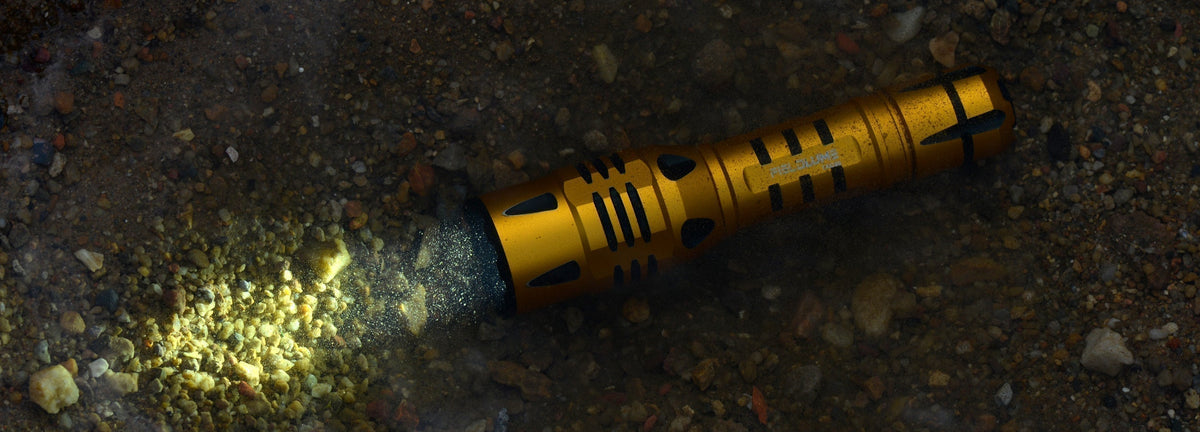
The FIELDLUME TAC30 Tactical Flashlight delivers up to 2400 lumens in Turbo mode and automatically reduces output as part of its operating logic.

What Is Thermal Step-Down?
Thermal step-down is an automatic reduction in flashlight output after operating at a high power level.
High-output LEDs require more electrical current, and some of that electrical energy becomes heat.
As LED temperature increases, thermal management becomes increasingly important. LED manufacturers also specify operating limits and may require current to be reduced at higher temperatures.
A flashlight can manage this by reducing output instead of trying to maintain maximum power continuously.

Why Does Turbo Create More Heat?
Turbo mode drives the LED and electronics at a high power level to produce maximum output.
That also increases heat generation.
The heat then moves through components such as the LED board, flashlight head and metal body before being released into the surrounding air.
This is why high-output flashlights can become noticeably warm during use.
Related Guide: Why Does Your Flashlight Get Hot? →
Turbo Output vs Sustained Output
Maximum lumen figures usually describe a flashlight's peak output.
That does not necessarily mean the flashlight will maintain that level continuously.
A more useful way to think about high-output flashlights is:
Turbo = maximum output when needed
Lower modes = longer, more sustainable operation
The exact behavior depends on the flashlight's design, battery, ambient temperature and thermal-control system.
Is Step-Down a Bad Thing?
Not necessarily.
Step-down can simply be part of the flashlight's normal output-management design.
What matters is whether the manufacturer clearly explains how the modes behave.
A flashlight should therefore be judged by more than its highest lumen number. Runtime, sustained output, beam pattern, battery capacity and intended use all matter.
A Real-World Example: FIELDLUME TAC30
The FIELDLUME TAC30 provides up to 2400 lumens in Turbo mode and uses automatic output reduction after high-output operation.
This allows Turbo to provide a short burst of maximum brightness while lower output levels remain available for longer use.
The important distinction is:
Peak output and sustained output are not the same thing.
Key Takeaway
Thermal step-down is an automatic reduction in output used by many high-power flashlights.
It happens because:
- higher output creates more heat;
- LED performance is affected by operating temperature;
- maximum output is not always designed for continuous use.
When comparing flashlights, look beyond the Turbo lumen figure and consider the complete output and runtime system.
See High-Output Operation in Real Use
The FIELDLUME TAC30 Tactical Flashlight combines a 2400-lumen Turbo mode with multiple lower output levels for different lighting needs.

FAQ
Is flashlight step-down normal?
It can be. Many high-output flashlights automatically reduce output after running at maximum power.
Does step-down mean the battery is empty?
Not necessarily. Thermal regulation and battery level are different factors, although both can affect output.
Can a flashlight stay on Turbo continuously?
That depends on the specific flashlight design. Maximum output is often intended for shorter periods rather than continuous operation.
Share:
Why Do Some Flashlights Stay Bright While Others Gradually Dim?
IP65 vs IP68: What Do Flashlight Water-Resistance Ratings Mean?